
College of Tropical Agriculture and Human Resilience (CTAHR)
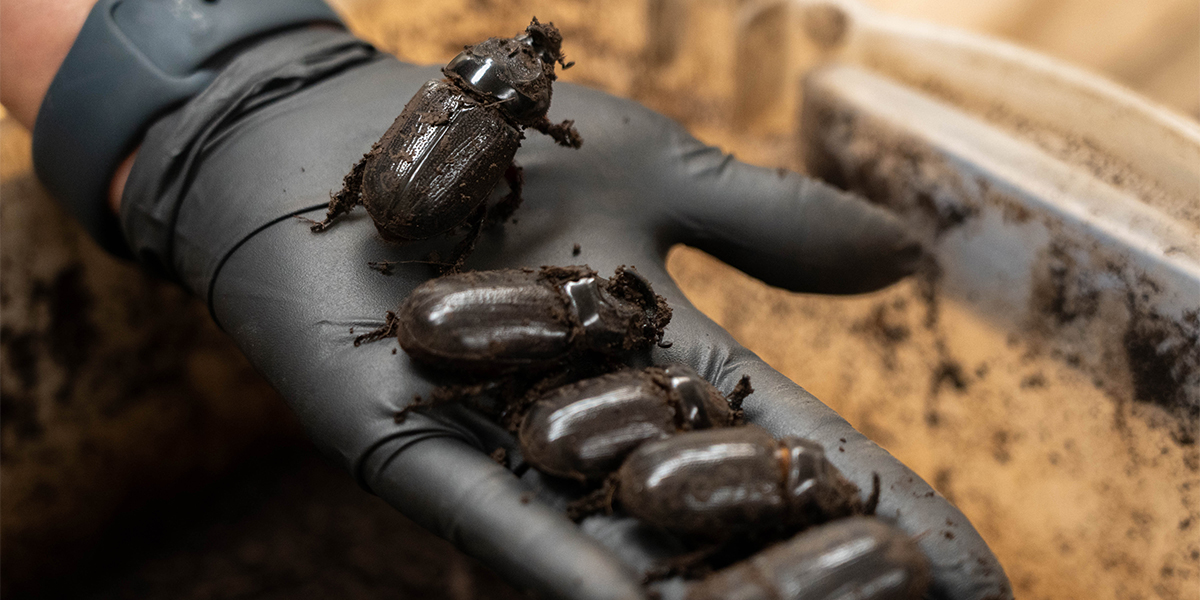
For more than a decade, UH Mānoa researchers have been leading the fight to protect Hawaiʻi’s iconic palms from the invasive coconut rhinoceros beetle (CRB). Now, scientists at the College of Tropical Agriculture and Human Resilience (CTAHR) are advancing a promising new solution: viruses that specifically target the destructive pest.
Your support can help accelerate this groundbreaking research and protect Hawaiʻi’s landscapes for future generations.
A Targeted Solution to a Growing Threat
Unlike broad chemical pesticides, CTAHR researchers are developing a virus that infects CRB larvae from the inside out, weakening and killing the beetles before they reach adulthood. Researchers also believe infected adults may become lethargic and less likely to damage palms.
“Pathogens are being used, but viruses are being underutilized as far as I’m concerned,” said Mike Melzer, virologist and researcher in CTAHR’s Department of Plant & Environmental Protection Sciences. “I know we can find viruses that will have a really good impact on important target species that are pests in Hawaiʻi.”

Coconut rhinoceros beetles can easily be identified by their distinctive rhino-like horns.
Years of Persistence Lead to Progress
For years, strict federal regulations prevented the virus from being brought into Hawaiʻi because specialized containment facilities were required. In early 2025, a breakthrough collaboration with the U.S. Department of Agriculture finally allowed the research to move forward safely.
Current permits limit testing to the larval stage, minimizing environmental risk because larvae cannot fly. Scientists are carefully studying whether the virus is host-specific to ensure Hawaiʻi’s native species, including the Kauaʻi stag beetle, remain protected.
The work also builds on international partnerships. In August 2025, Melzer and former student Nelson Masang Jr. traveled to Palau, where the virus has helped keep CRB damage manageable for decades. Collaborating with partners at Palau Community College, the team collected genetic variants of the virus for further study at UH Mānoa.
Now led in part by doctoral student Kristen Gaines, researchers are actively infecting CRB larvae in the lab, with early results showing larvae dying within 12 to 30 days.
“I sleep a little better at night because Kristen said she’s starting to see larvae getting lethargic and dying after just being exposed to the virus,” Melzer said.
Your Support Makes Discovery Possible
Gifts to critical initiatives like this will help support student researchers, maintain specialized laboratory operations and strengthen partnerships across the Pacific.
By investing in this innovative biological solution, you are helping preserve Hawaiʻi’s palms, ecosystems and agricultural future.
Your generosity makes a lasting impact on our students, faculty, and community. Join us in supporting this important work.
Questions? / More Information
If you would like to learn how you can support UH students and programs like this, please contact us at 808-956-8700 or send us a message.