
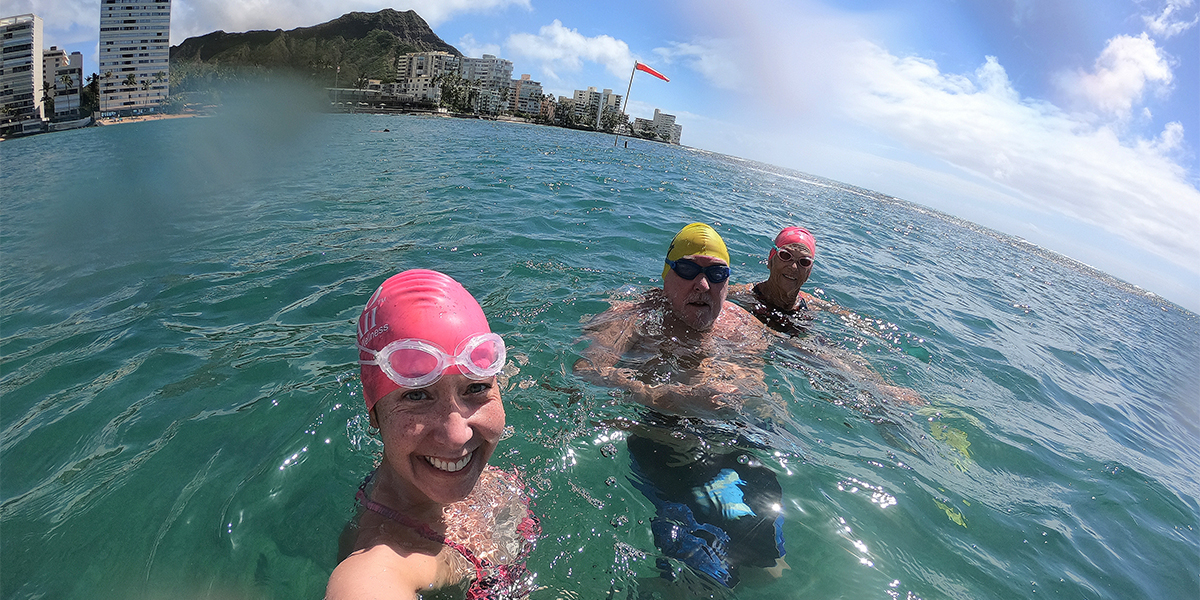
A career rooted in Hawai‘i
Jim Roumasset dreamed that he gave a substantial gift to the UH Economics Dept. On awakening, he realized what a good idea it was. In discussions with Econ chair, Nori Tarui and UHERO environmentalist Kimberly Burnett, he decided that the gift should be in the form of a research assistantship in ecological resource economics.
Prof. Emeritus Roumasset first came to UH Mānoa as a graduate student, earning an MA in economics in 1969. He was drawn by an affinity for Asia and a strong, personal letter from the department chair. He had just completed his Peace Corps service in the Philippines, and Hawai‘i felt like a natural fit.
He spent his career at UH, teaching and researching economics, mentoring students from the Philippines and around the world. Along with former students, his work helped shape policy discussions surrounding agricultural risk, sustainable development, institutional change, competition policy, and resource economics, especially concerning water and energy.

Economies are embedded in nature
Ecological resource economics is distinct from traditional environmental economics. While the latter often centers on pollution and climate change, ecological resource economics examines how multiple natural resources interact, such as groundwater, the watershed, coastal marine resources, invasive species and protective infrastructure.
“Resource economics focuses on managing a single resource,” he explains. “Ecological resource economics allows for the interaction of these resources, and how one affects the other.” The goal, he says, is long-term human welfare. “It’s a balancing act. How you manage interacting resources and how you incentivize and invest in conservation.”
The Ecological Resource Economics Research Assistantship Fund will support graduate students at UH Mānoa who show aptitude in resource economics and a strong interest in the natural environment. Roumasset has pledged support for four years, with renewal eligibility for recipients.
A fellowship with real-world impact
Kim Burnett, one of Roumasset’s former graduate students, says the new assistantship will open doors for students in a rigorous, deeply relevant field.
“Every new problem I approach I see through an ecological resource economics lens,” she says. “Ecology and the economy are part of the same system, and decisions made within either will affect both.”
Burnett studied under Roumasset from 2003 to 2007 and worked with natural resource planners across Hawai‘i and the Pacific, applying theory to real-world management. She’s looking forward to mentoring students who receive the fellowship.
“Jim has taught and mentored hundreds of students on topics including agricultural development, energy economics, and the conservation of water resources,” she says. “This fellowship continues that legacy.”
Your generosity makes a lasting impact on our students, faculty, and community. Join us in supporting this important work.
Questions? / More Information
If you would like to learn how you can support UH students and programs like this, please contact us at 808-956-8700 or send us a message.