
Recent advances in DNA analysis have revolutionized our understanding of the microbiome—the communities of bacteria, fungi, and single-celled organisms living on and inside plants, animals, and humans.
Once viewed primarily as threats to health, these microorganisms are now recognized for their complex roles in ecosystems as they influence the health and interactions of their hosts.
The Center for Microbiome Analysis through Island Knowledge and Investigation, or C-MĀIKI, is at the forefront of this biological revolution in microbiome science. C-MĀIKI is a group of 21 cooperating faculty from four colleges across the University of Hawai‘i at Mānoa. Its research leverages the unique backdrop of the Hawaiian Islands and its people, toward new solutions for the world’s most pressing problems, including climate change, infectious diseases, and loss of biodiversity.
Guided by a deep connection to place and community, C-MĀIKI’s research projects reveal how microbiome science can address urgent and environmental health challenges.
Coral reef resilience on Maui
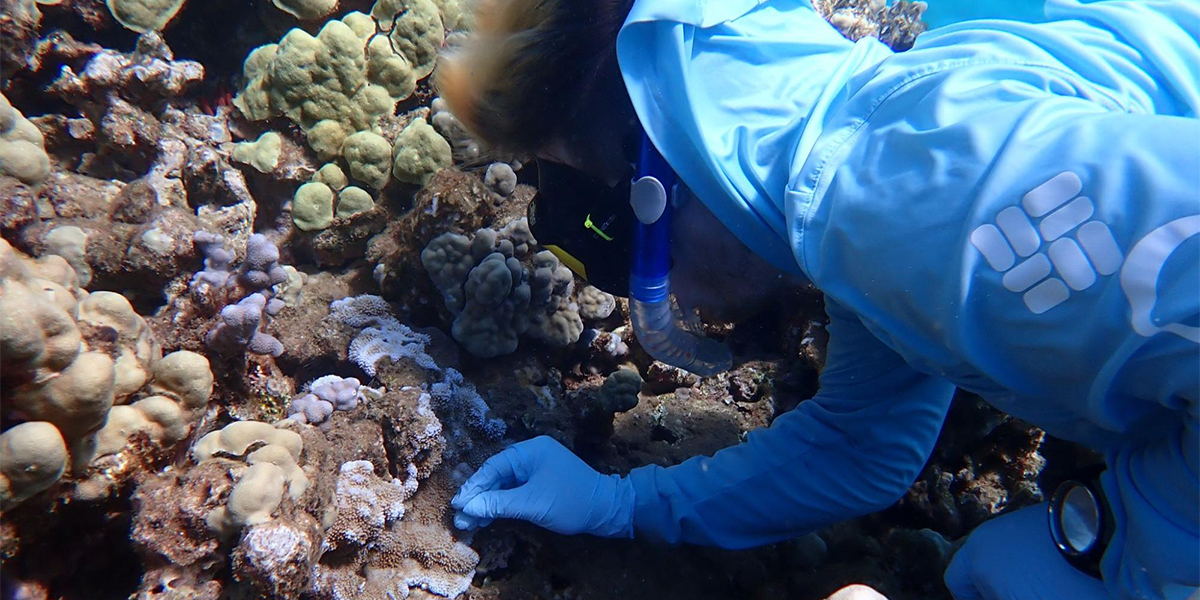
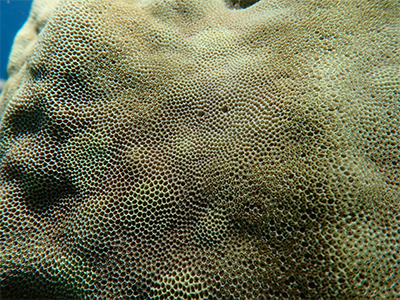 In the wake of the Lahaina wildfires, Dr. Craig Nelson’s lab is investigating how pollutants from the burn zone are affecting nearby coral reef ecosystems—an unprecedented opportunity to study the impact of an urban wildfire on an intact reef. A rapid response team from the lab, led by PhD candidate Sean Swift, looked for possible elevated levels of heavy metals, organic contaminants, and nutrients in reef waters adjacent to the fires. But a more important question for the community was whether the fires had longer-term impacts on coral species that are vital to reef health.
Corals are complex organisms that rely on stable communities of symbiotic bacteria, known as the coral microbiome, to maintain their health. Nelson’s team, led by PhD candidate Justin Berg, is contrasting the hundreds of microbial species in coral tissue samples from sites near and far from the wildfire to detect signs of microbiome disruption. Combining this data with water quality and other environmental indicators, the researchers aim to better understand how fire-related pollutants affect coral resilience — and to generate new insights on microbial communities’ responses to environmental stress.
"The Lahaina wildfires are an unprecedented event as the first major urban wildfire adjacent to an intact coral reef ecosystem," says Nelson. "Our monitoring has shown elevated levels of pollutants near the burned harbors, but minimal detectable impacts to the health of the reefs so far: we hope to resolve patterns of microbiome destabilization that will provide a snapshot of longer-term stress to the reefs."
Infectious disease control with sterile mosquitoes
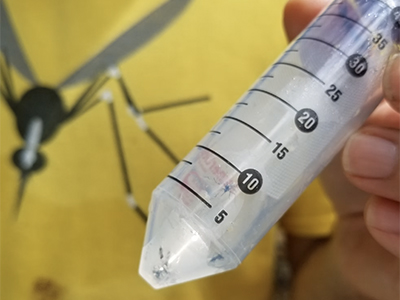 Mosquito-borne diseases pose a serious threat to public health and Hawai‘i’s endangered wildlife, including native honeycreepers. Dr. Matthew Medeiros’s lab is working to improve mosquito control strategies, including those that involve releasing non-biting male mosquitoes raised in captivity to suppress wild mosquito populations. While past efforts have focused on breeding competitive males, this project explores a new frontier: the mosquito microbiome.
"Lots of traits that shape mosquito quality relate to the microbial partnerships they form as they develop in different environments," says Medeiros. "Our goal is to develop a probiotic that promotes high-quality, mass-reared mosquitoes with a high probability of mating on the landscape."
Microorganisms living inside mosquitoes play a key role in their development, metabolism, and immune function. Medeiros’s team is identifying microbes that either support or hinder mosquito performance in captive settings, with the goal of creating a probiotic formula that boosts the quality of mass-reared males. This research could enhance the effectiveness of mosquito suppression programs—protecting human communities and vulnerable native species.
Biodiversity conservation with indigenous pomace flies
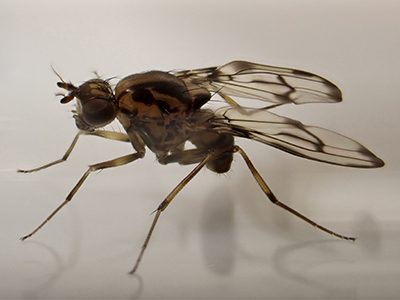 Native Hawaiian Drosophila—pomace flies known for their rapid evolution—are facing extinction, along with many of the host plants they depend on. Dr. Joanne Yew and Dr. Nicole Hynson are exploring how microbiomes may play a critical role in the success of conservation efforts. Traditional reintroduction strategies have had mixed results, and this project investigates whether beneficial microbes could improve the health and resilience of captive-raised species.
By studying the mutual relationship between several native species of Drosophila and their native host plants, including Clermontia, the team is identifying key bacterial and fungal species supporting plant and insect health. Their goal is to develop microbial supplements or prebiotics that enhance immunity, nutrition, and fitness—giving reintroduced populations a better chance to thrive. This work could offer a new model for integrating microbiome science into biodiversity conservation.
"If reintroduction is successful, it might change the way we implement conservation strategies by using a more holistic approach—one that considers the interdependence between plants, microbes, and animals," says Yew.
Hynson says, "We’re using a combination of classical microbiology and cutting-edge molecular techniques to identify the microbes partnering with native plants and flies. Our hope is that some of these microbes will aid in fly conservation efforts via prebiotics."
Expanding the vision
While each of these projects is already generating valuable insights, additional funding could significantly expand their reach and impact. The researchers behind these initiatives have outlined compelling visions for accelerating progress and deepening our understanding of microbiome science in Hawai‘i, with increased financial support.
With expanded funding, Nelson’s team studying the Maui reefs could extend their coral microbiome research into a multi-year study, allowing for long-term monitoring of reef health and resilience. They also hope to develop corals into sentinels of chronic coastal pollution by analyzing how microbial communities respond to contaminants like heavy metals and organic pollutants. Coupling microbiome data with advanced chemical analyses, the team aims to uncover hidden patterns of environmental stress, giving communities and policymakers better tools for protecting Hawai‘i’s reefs.
Medeiros envisions a shorter timeline for developing a probiotic to enhance the fitness of mass-reared male mosquitoes used in disease-control efforts. This would involve deeper investigation into the mosquito microbiome, expanded lab trials, and broader field testing to refine microbial combinations improving mosquito health and competitiveness. The goal is to boost the effectiveness of mosquito suppression programs, protecting human populations and Hawai‘i’s endangered birds from mosquito-borne diseases.
Yew and Hynson, with more funding, could dramatically expand their research into the microbiomes of endangered Hawaiian flies and their host plants. Advanced tools like whole genome sequencing, metabolomics, and single-cell analysis will give them better understanding of how these species interact and adapt. More resources would also allow for broader monitoring in the wild, development of synthetic diets, and creation of a searchable database of microbial and behavioral data. Ultimately, they hope to establish a field station and microbe “lending library” to support conservation efforts across Hawai‘i.
Leading the way in microbiome science
As microbiome research continues to reshape our understanding of health, ecology, and conservation, the University of Hawaiʻi at Mānoa stands at the forefront of this exciting field. Through the collaborative work of C-MĀIKI, UH Mānoa is advancing scientific discovery while honoring Hawaiʻi’s unique ecosystems and cultural knowledge—offering innovative solutions with global relevance.
Your generosity makes a lasting impact on our students, faculty, and community. Join us in supporting this important work.
Questions? / More Information
If you would like to learn how you can support UH students and programs like this, please contact us at 808-956-8700 or send us a message.