
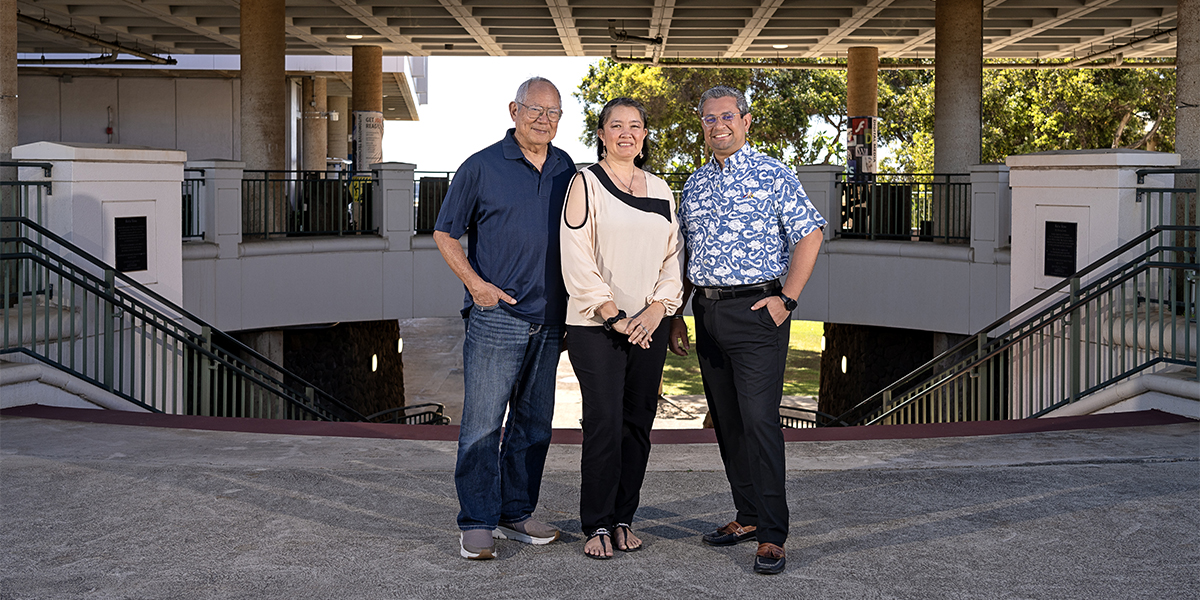
Abigail Eli wanted to make a difference for homeless people on the Waiʻanae coast, but she didn’t think she could truly understand their experiences without living homeless herself, so she and her 12 children – seven biological, two adopted, three taken in from difficult home environments – moved to Puʻuhonua o Waiʻanae, an encampment near the Waiʻanae Boat Harbor, for two months.
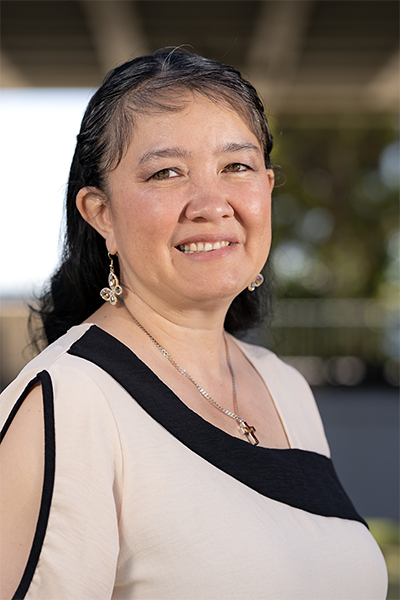 “I fell in love with all the kids who lived there,” she says. “Our site was a kid magnet because of my 12 children. We had kids from all over the encampment coming to eat, play and sleep over.”
Abbi played a simple multiplication game with her children as they walked the area trails. However, children from the community couldn’t participate, because they hadn’t learned basic multiplication. She says, “Most of the kids in intermediate school only attended school two or three times a month, and they usually dropped out in high school. These children were brilliant, creative, and fun-loving.
“It was as if they were being forced into generational poverty. Only a few adults who lived there graduated from high school, and these few never went on to higher education. It was evident that education played a major role in a person’s future socioeconomic status.”
Broken places
When she and her children returned home, “Doing nothing was not an option,” says Abbi, who cleared her living room and turned it into a tutoring center, lining both sides with desks and computers. “These kids walked two miles from the homeless encampment to my home every day for help with schoolwork. I also immediately began teaching as a substitute teacher in the Waiʻanae-Nānākuli district. I have always loved teaching, so helping them this way lit me up. I have a heart for teenagers, especially the ones who have been through broken places.”
Abbi was determined to earn a bachelor’s degree so she could help these children. She says, “I couldn’t take them someplace I had never been. If I was going to help them be successful from kindergarten to college, I needed to be willing to educate myself first.”
The Kūlia and Ka Lama Education Academy, a program at Leeward Community College’s Waiʻanae Moku Center sponsored by Inpeace – the Institute of Native Pacific Education and Culture – helped Abbi get started. Her first math class was in statistics and probability.
“I cried a lot in that class. Math was my worst subject,” she says, “and it was as if the professor was speaking a completely different language. Whenever my kids brought work home from school, I would look at their math problems and feel so stupid and so sad every time I told them I couldn’t help.”
Because Hawai‘i has a shortage of licensed math teachers, Abbi knew she could best help students in Waiʻanae break out of generational poverty as a math teacher herself. She says, “What would I say to my kids when life hands them difficult challenges? Would I tell them to quit when it gets hard? I could not in good conscience see myself doing that. This meant I couldn’t give up either. I told myself I could do anything I set my mind to, and I can do it well. I never gave myself an excuse from then on.”
An impact on generations
Abbi had 17 children in her home and was helping other families as well. Although she was committed to earning her degree and doing her part to pay for it, she wouldn’t give up taking care of people who needed her. She says she applied for every scholarship she could get her hands on.
She received, among several others, the Karen Fujishima-Lee Memorial Scholarship, established by Michael Lee in honor of his wife, a professor of mathematics at Leeward CC for three decades. Karen was a beloved member of the faculty, a special teacher whose students say she built self-esteem and confidence through powerful encouragement.
Since 2010, the fund has provided financial support for students of all ages and backgrounds who seek a degree or certificate at Leeward CC, and whose financial needs are created by the demands of attending college and the demands of family, childcare, jobs, commuting, disabilities or limited resources.
“I still am so grateful that someone who never met me would invest in my life in such a way that it would impact generations after me. I have three children in college today because generational patterns have been broken,” says Abbi.
Creating new cycles
One year ago, Abbi graduated with her BA in math education. Today, she continues as senior pastor at Waiʻanae Assembly of God and is the executive director of the church’s Mākaha Community Center, an outreach serving 7000 families island-wide with counseling, housing assistance, food, clothing, and academic help. She is working on a master’s degree in school counseling and mental health psychology.
“My desire is to help people who have experienced trauma to heal, from the outside in,” she says. “I’m working as the homeless liaison for the Hawai‘i state Department of Education, and I haven’t decided yet what my next role will be. I’ll decide solely on where there is greatest need and where I will make an impact, and I’m determined to pray and to wait until I know what will be best for the people I serve.”
Karen Fujishima-Lee once wrote in a notebook, “The joy of teaching is fueled by inspiration from my students. Students working two jobs; students with families and children; military wives; retirees returning to complete a dream; and students in transition. Their dedication to education and their perseverance in the learning process increase my resolve to do the best possible job I can for my students.”
Frustration with math once brought Abbi to tears, but Karen’s commitment to students like Abbi continues to help students overcome obstacles to education, even 16 years after Karen’s death.
Abbi’s own commitment to helping Hawai‘i’s people break the cycles of poverty and homelessness through education may lead to future beneficiaries of Karen’s scholarship, perhaps establishing a completely different kind of cycle.
Your generosity makes a lasting impact on our students, faculty, and community. Join us in supporting this important work.
Questions? / More Information
If you would like to learn how you can support UH students and programs like this, please contact us at 808-956-8700 or send us a message.