
“You can do mathematics because your kūpuna did mathematics,” Linda Furuto tells young mathematics students. “They weren’t called mathematicians or scientists – they were navigators and captains – but that’s exactly what they were.”
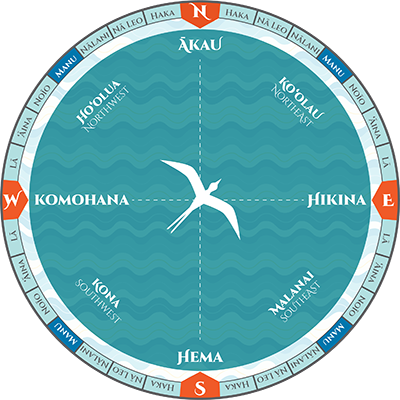 Furuto, a professor of mathematics education at UH Mānoa’s College of Education, explains that long before the principles of mathematics were written in textbooks, they were practiced by Polynesian voyagers through intimate knowledge of the natural world. Patterns of waves and currents, birds’ flight behavior, and the movement of stars in the sky presented mathematical problems enabling them to cross the ocean with precision and aloha.
The study of different cultures’ incorporation of mathematical ideas with their practices and worldviews is ethnomathematics, and it’s helping students around the world to connect textbook learning to cultural, real-world practices and values of kindness, compassion, strength, courage and vision.
Furuto says, “Ethnomathematics explores the relationship between mathematics and culture, recognizing that mathematics isn’t just a universal language, but it is shaped by the specific contexts of different societies. It is relevant, meaningful, contextualized, real-world problem solving.”
Thinking locally and globally
Furuto is the director of UH Mānoa’s graduate certification in ethnomathematics, the only such academic program in the world. The program equips teachers to incorporate culturally relevant mathematics in their classrooms and to implement these curricula in their schools and communities – wherever their communities may be.
The first 10 years were dedicated to Hawai‘i teachers. Today, most educators in the program are not from Hawai‘i. “One participant is from a reservation in South Dakota. Another is from Texas, and one does work in the Bay Area with Latinx populations,” says Furuto.
Three of the program’s graduates were so inspired, they launched their own international ethnomathematics symposium, bringing together teachers, middle school students and high school students from British Columbia, Alaska and Hawai‘i. Furuto says, “They’re developing lessons for their populations, which is what we want our graduates to do – to return home and uplift their communities.”

Donors connecting dots to actualize the vision
A new study funded by the Nakupuna Foundation is evaluating the program’s effectiveness, comparing its objectives to students’ progress. Furuto says, “We wouldn’t be able to conduct this impact study without them. It costs the kind of money we don’t have, but they said, ‘Oh, we got this!’ They said we are a vessel of values.”
“The National Council of Teachers of Mathematics wanted to feature us in a highlight reel at its annual conferences,” says Furuto, “but it cost tens of thousands of dollars we just didn’t have.”
When these unanticipated expenses emerged, the Nakupuna Foundation and the Tommy Holmes Foundation provided generous support. “They were happy to help us connect the dots for this vision without financial constraints, which meant so much. They said, we want to be part of creating access-based structures for success where they might not exist. We want to be a catalyst for lasting, positive change.”
Your generosity makes a lasting impact on our students, faculty, and community. Join us in supporting this important work.
Questions? / More Information
If you would like to learn how you can support UH students and programs like this, please contact us at 808-956-8700 or send us a message.