
When the Lahaina wildfires tore through West Maui, Michael Young lost his home, as did his two sisters. In the days that followed, the calls began. Friends, neighbors and community members reached out, asking how they could learn the basic skills to repair what remained. With generous support from the Hawaiʻi Community Foundation's Maui Strong Fund and other donors, UH Maui College was able step in and help the community in many ways including providing the training so urgently needed.
“I grew up in Lahaina and saw how many homes were lost or badly damaged,” said Young, Apprenticeship and Trades Coordinator at UH Maui College. “People wanted to know if there were programs that taught carpentry, framing, roofing, painting – anything that would help them start restoring their homes.”
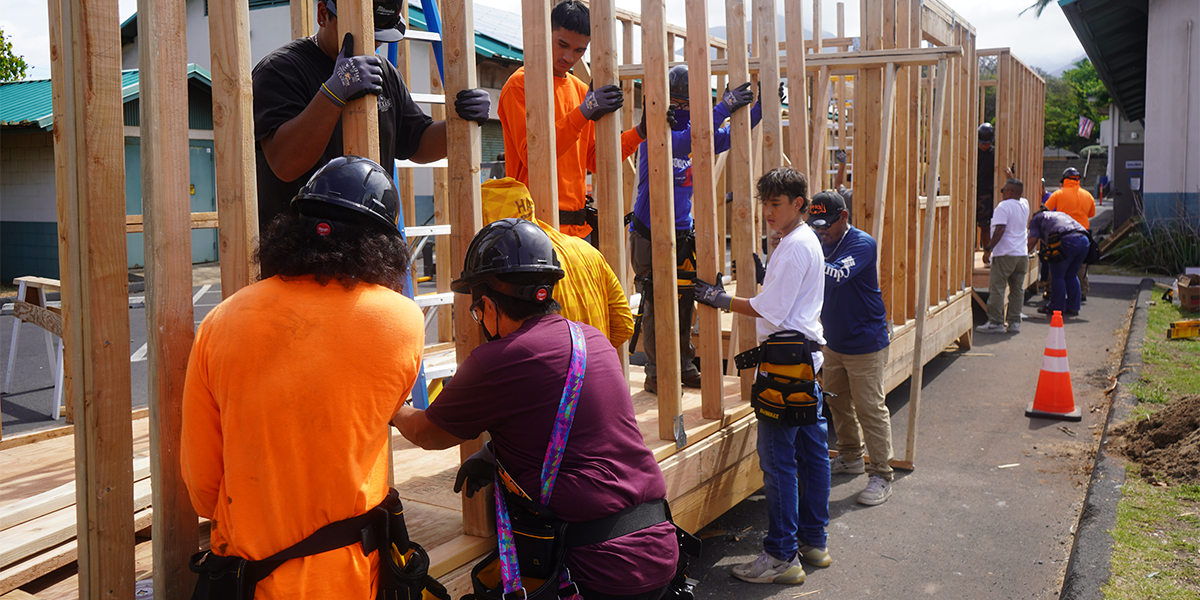
A small shelter takes shape at UH Maui College
Meaning small shelter, Hale Pāpaʻi emerged from that urgent need. Based at UH Maui College, the hands-on construction initiative brings together – for the first time – credit courses, union apprenticeships and free non-credit community classes to help Lahaina residents recover while learning practical building skills.
“What’s happened with Hale Pāpaʻi is that construction classes across the college have been able to apply their curriculum in a real way,” said Laura Nagle, Interim Vice Chancellor of Academic Affairs. “Students are learning by doing, while contributing to something that directly serves the community.”
Portable sheds with lasting lessons
The program’s first focus was immediate and essential: storage. Families displaced by the fires often had nowhere to securely keep tools, belongings or keepsakes while long-term rebuilding remained uncertain. “This is a way for people to feel safe and regain a sense of stability,” said Moani Whittle-Wagner, an academic support specialist who named the project and helped guide its launch.
To avoid construction permitting, Young proposed building 8-by-10-foot portable sheds – small enough to move, yet large enough to meet real needs. Built on campus and delivered directly to landowners, the sheds double as teaching tools for framing, roofing, painting and flooring. Each one is constructed by local hands, reinforcing a sense of shared effort and connection.
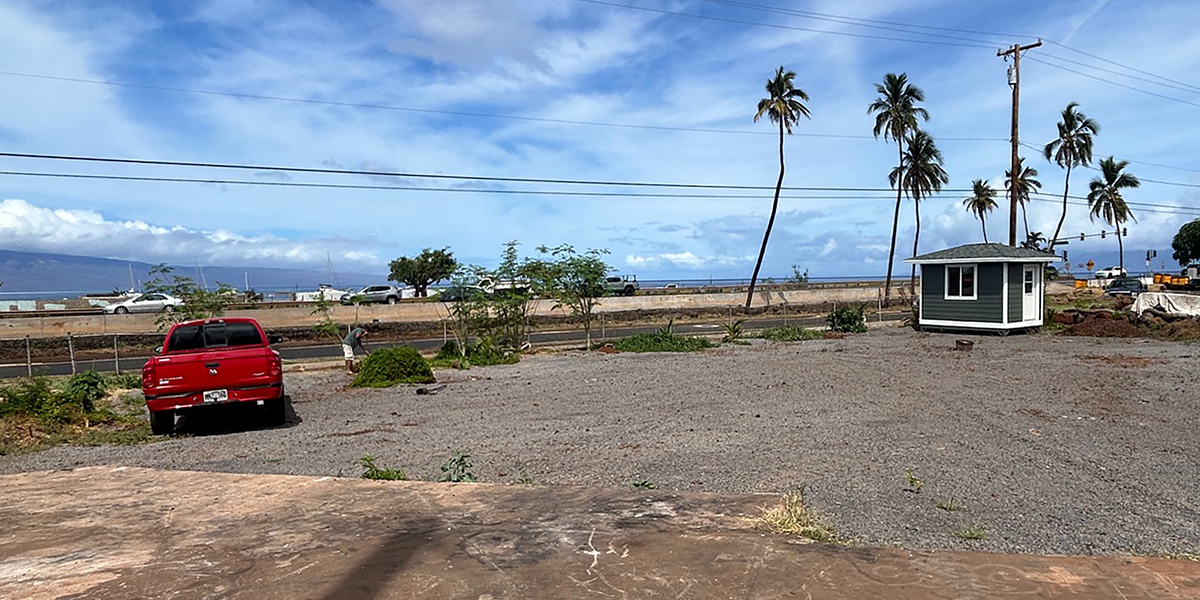
This finished portable shed was delivered to a Lahaina lot where Gene Castillo and his family are rebuilding their homes.
Skills that rebuild more than structures
For Gene Castillo, Hale Pāpaʻi offered both skills and hope. His family lost multiple homes in the fire. Evacuating with his then-six-month-pregnant wife and young daughter Azel, he recalled watching his neighborhood burn. “Without her,” he said, gesturing toward his now two-year-old daughter Zanel, “I think we would have been lost. She gave us something to look forward to.”
The impact is undoubtedly tangible. To date, 63 sheds have been delivered, with 255 households on a waiting list. Some serve as temporary bedrooms; others store rebuilding supplies.
“Drivers are often greeted with hugs and tears,” Whittle-Wagner said. “They’re small structures, but the relief is real.”
As immediate needs are met, Hale Pāpaʻi also lays the groundwork for long‑term rebuilding, opening pathways into various trades. According to Nagle, participants move between non-credit and credit programs, with many transitioning into apprenticeships and construction careers. A six-week pre-apprenticeship program with the Carpenters Union reports a 100% placement rate, while free weekly classes continue to draw learners from high school students to kūpuna.
“Several philanthropic groups have been crucial for funding the Hale Pāpaʻi,” said Nagle, “but future support will be needed to meet continued demand.”
For Whittle-Wagner, the project’s meaning extends beyond its physical form. “These sheds are more than wood and nails,” she said. “They’re hope in a time of loss.”
Hale Pāpaʻi demonstrates that recovery doesn’t wait for permits, budgets or formal plans. It begins when people are willing to learn, build and show up for one another – one shed and one skill at a time.
Build with us
With demand for these tiny sheds still growing, community support is essential to keeping this program strong. Your donation ensures Lahaina residents and displaced families have the skills and materials they need to regain a sense of stability.
Your generosity makes a lasting impact on our students, faculty, and community. Join us in supporting this important work.
Questions? / More Information
If you would like to learn how you can support UH students and programs like this, please contact us at 808-956-8700 or send us a message.