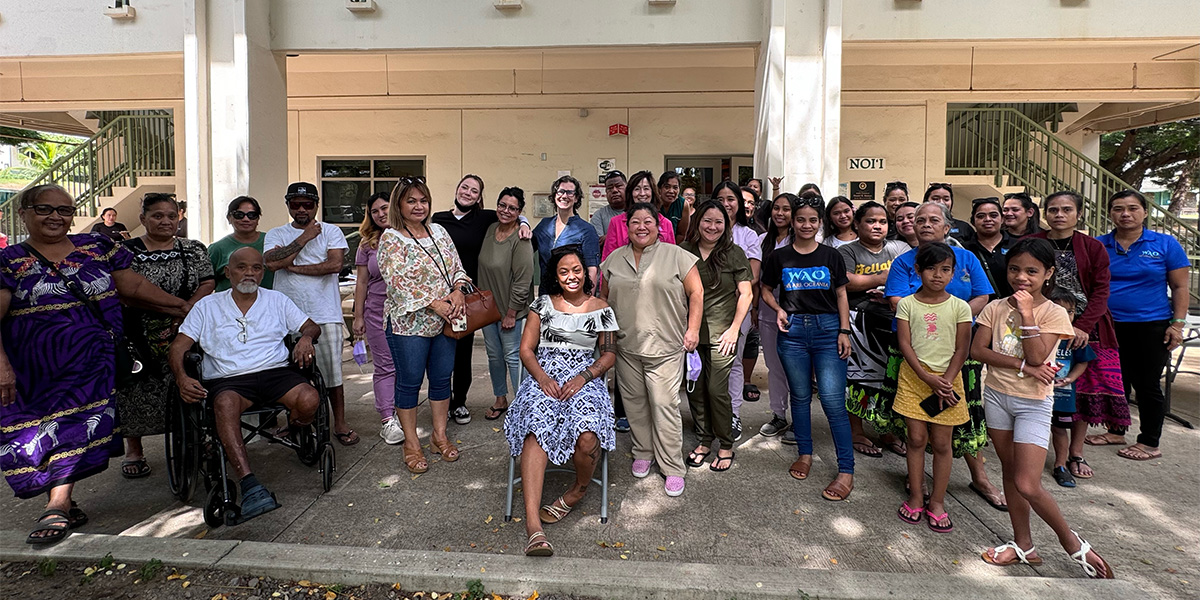
Smiles are beginning to shine a little brighter on Maui, thanks in large part to a generous grant from the Freeman Foundation that’s transforming how underserved Micronesian communities access critical dental hygiene services.
Through this grant, students in the University of Hawaiʻi Maui College Dental Hygiene Program have been reaching out far beyond the classroom, providing hands-on oral cancer screenings, hygiene demonstrations and even providing free nutritional resources like microgreens, jams and jellies. But the real impact? It's in the trust that’s being built – one event at a time.
Bridging the Gap to Dental Care
When the outreach initiative began, Dental Hygiene Program Coordinator Leanne Higa knew that gaining the trust of the Micronesian population would not be easy. Many live in tight-knit, multi-generational households and are often reluctant to seek help due to language barriers, cultural hesitations and a long-standing mistrust of institutions.
“The Micronesian community had reasons to keep their distance,” Higa said. “But we showed up. We visited churches, pastors’ homes, community gatherings. We brought students with us, because when they see the students, they respond. It feels personal.”
The Micronesian population on Maui includes those of Marshallese, Kosraean, Pohnpeian, Chuukese and other Federated States of Micronesia descent. Language access was a key piece of the puzzle. With help from Higa’s longtime friend Marilyn Tadeo, who is Marshallese, along with Tadeo’s mother and sister, translation and outreach were made possible. Now, with ongoing partnerships with ‘Iao United Church of Christ and organizations like Voices of Micronesia (VoMOM), Roots Reborn and We Are Oceania, community members feel seen and supported.
“These events are absolutely important for continuous education of dental hygiene,” said Della Nakamoto, a Marshallese board member of VoMOM. “Access to any dental facility is critical for our community. Many of our community members have no teeth even in their 50s and this is due to lacking the knowledge of daily dental hygiene, which is not taught in the islands where we come from.”
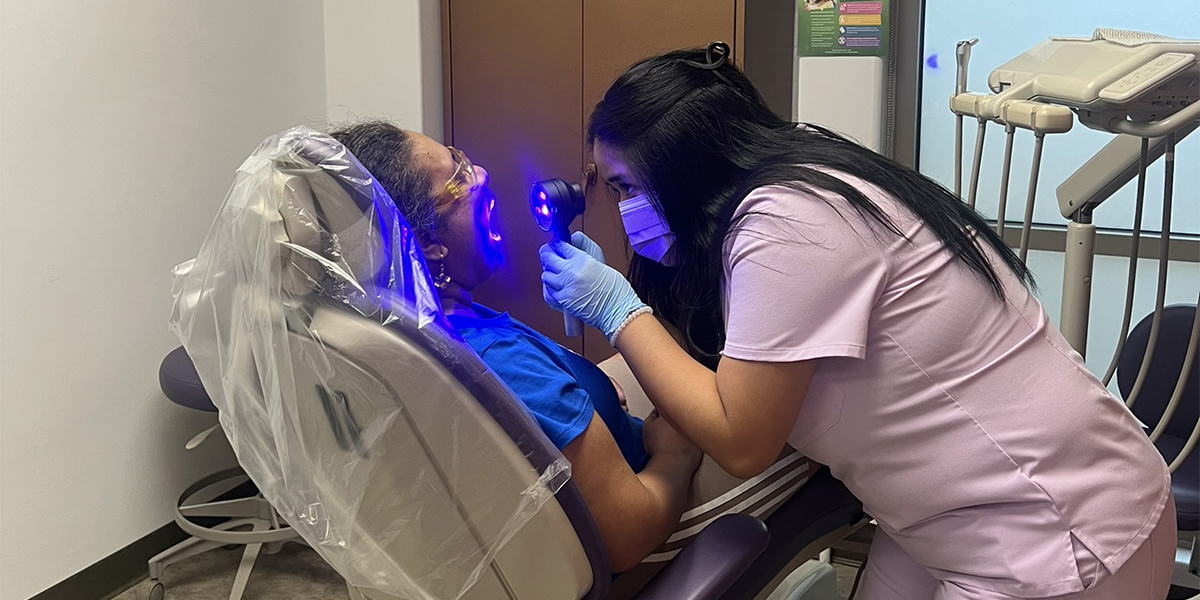 Dental hygiene student Marie-Nicole Medrano conducts an oral cancer screening on a patient with an advanced diagnostic tool.
Screenings That Could Save Lives
The students offer more than oral hygiene tips – they’re trained to detect early signs of oral cancer using cutting-edge tools and techniques. A special light, for example, reveals healthy oral tissue as fluorescent; dark patches may indicate abnormal growths. Students learn to feel for swollen lymph nodes and use pen-sized oral cameras to photograph suspicious areas. The training comes from oral cancer expert Susan Cotten of Colorado, who visits Maui annually to conduct workshops on early detection.
A Pathway to Careers – and Connection
The outreach doesn’t just benefit patients. For the students – who are required to complete at least 10 hours of service each semester – it’s an opportunity to learn, connect and inspire. At a recent Maui Job Corps fair, a group of Marshallese young adults, aged 18–27, engaged with the dental hygiene students and expressed interest in joining the program themselves.
“They saw students who looked like them doing this important work,” said Higa. “That moment of connection – it can change someone’s path.”
A Model for Expansion
Looking ahead, UHMC plans to expand its program to include 20 new students across Maui and four from Hawai‘i Island by Fall 2025. The goal: train a new generation of dental hygienists who reflect the communities they serve, and who are committed to making care accessible to all.
As Pohnpei native, Santiago Joab of VoMOM puts it, when the COFA (Compacts of Free Association) community becomes aware of the vital resources and support available through UH Maui, it not only strengthens trust in public institutions, but it also fosters a deeper sense of connection, comfort and shared purpose across Maui.
“We need this support,” added Joab. “The cost of living on Maui is so high that many families do not see dental care as a necessity. This dental hygiene program fills in the void that the cost of living may have eroded from families’ budgets.”
Questions? / More Information
If you would like to learn how you can support UH students and programs like this, please contact us at 808-956-8700 or send us a message.