
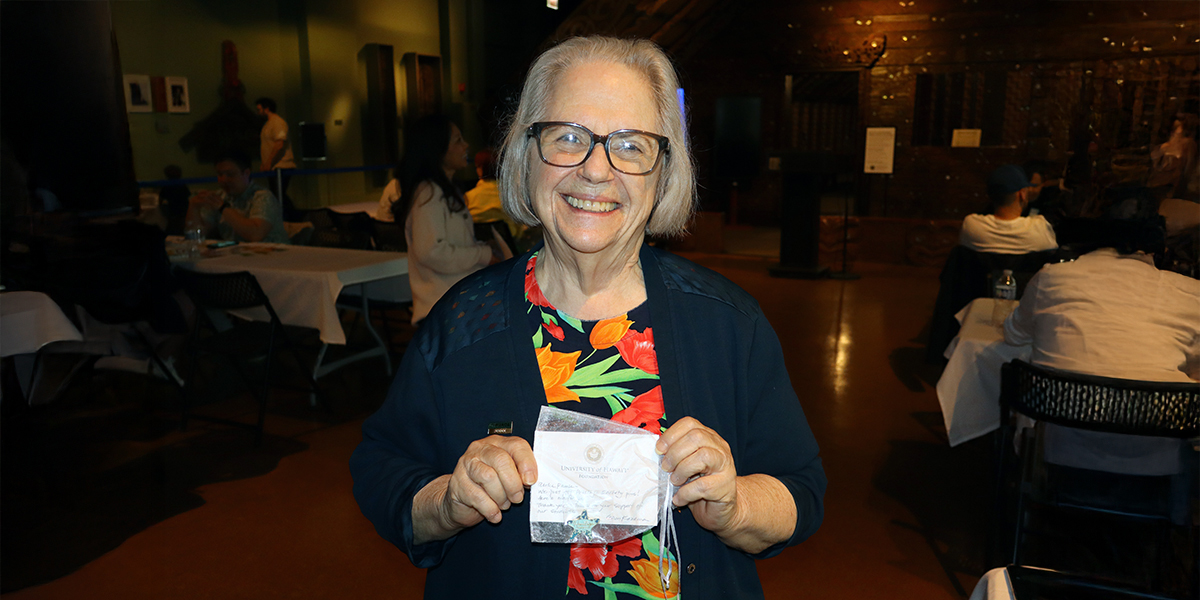
“Tikkun olam is a Jewish concept of helping to repair the world,” says Paula Barenbaum Cohen. “It’s something I learned as a child, and it intensified in social work school at UH Mānoa, where I earned my master’s degree 60 years ago, in 1965. We all have an obligation to help repair the world, to help make it a better place.”
In her senior year at a “small, conservative undergraduate school” in Illinois, she planned to attend another college on a one-semester exchange. “When my mom was concerned about the school, she said, ‘Don’t do this! Go anywhere you want for grad school!’”
“Life works itself out,” says Paula, who had always wanted to see the world and to grow and broaden her perspectives. She was accepted to UH Mānoa, and a grant from the National Institute of Mental Health helped her with tuition, fees, and a stipend. In return, she committed to working for two years after graduation in a setting with psychiatric consultation.
“It opened up great vistas for me,” she says. “I was amazed at how much I learned and how much I grew. I had a fieldwork instructor named Katie Tyson who became my mentor, with whom I maintained a relationship for years after, until she died at age 96. Many times when I went back to Hawai‘i, it was to see her.”
Meeting people where they are
“The first lesson you learn in social work school is to start where your client is,” says Paula. “The second lesson you learn at UH is to start with who they are. What are their ethnic and cultural backgrounds?”
Half of her classmates were from Hawai‘i; the others were from Canada, China, Japan and elsewhere in America. Some, like her, were fresh out of undergrad studies, while others were returning to school after some time. She says, “We were a very diverse group, and it taught me so much about people and how to relate. I worked with a senior citizen who always brought a bottle of Coca-Cola and a little package of cookies for me, and I knew it was something of a financial hardship for her, but how could I refuse? I learned a lot from her.”
Paula explains that social work is a problem-solving process in every area of practice, and part of solving problems is to ask for help or information when you need it. In her first year of field instruction, she worked with a young mother who had two small children with a congenital life-limiting condition.
“Help was available,” she says, “but she didn’t have transportation. My instructor questioned me about resources, which led me to the Lions Club, whose members provided this mother with a used car and a year of paid auto insurance so she could get the services her children needed. It taught me to explore possibilities, and to ask for help for my clients many times through the years.”
Learning and working in Hawai‘i taught Paula to find out what’s truly important to people, and to explore their values. It was a special place.
“I have so many memories,” she says. “I still have my Hawai‘i driver’s license. It’s a piece of paper with a thumbprint and all my info on it. I didn’t want to leave Hawai‘i. I planned to stay. I was job-hunting, but my stepfather died, and I came back to Chicago at my mother’s request. If I hadn’t come back, I wouldn’t have the three sons I have today. So again, life works itself out.”
Joy in watching people grow
Paula was a social work manager and supervisor, and she was a fieldwork instructor for three of Chicago’s schools of social work. She provided direct services, primarily in healthcare and services to senior citizens, and she served on medical ethics committees. She is still a community representative for the medical ethics committee at Northwestern Memorial Hospital.
“I was never a psychotherapy-focused social worker,” she says. “I was a supporting, nurturing supervisor, and one of my joys in life was to watch people bloom and grow.”
Paula says that through it all, she learned to give back. She has designated a portion of her estate for the Thompson School of Social Work & Public Health as a recognition of their value in her life. She says, “UH and my undergrad school are beneficiaries of my trust. They aren’t huge beneficiaries, but my education is important to me, and I want to include these institutions along with my family.”
She hopes she will still have a meaningful impact. “Hopefully, there will be enough to provide books for a student for a year, for a number of years to come,” she says. “My grad school education was essentially free. I was very fortunate. I’m paying back because one repays one’s good fortune, and my time at UH remains one of the most meaningful chapters of my life.”
Your generosity makes a lasting impact on our students, faculty, and community. Join us in supporting this important work.
Questions? / More Information
If you would like to learn how you can support UH students and programs like this, please contact us at 808-956-8700 or send us a message.